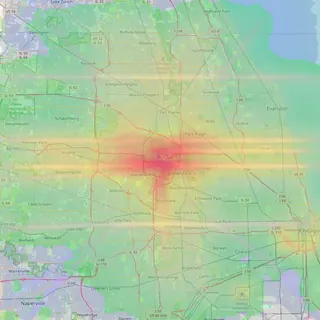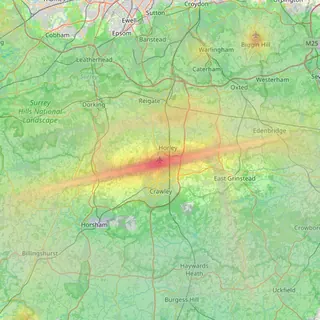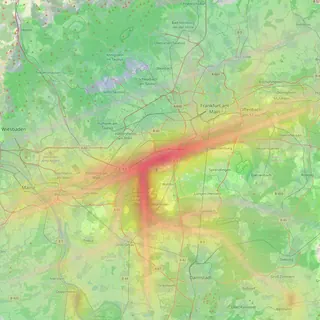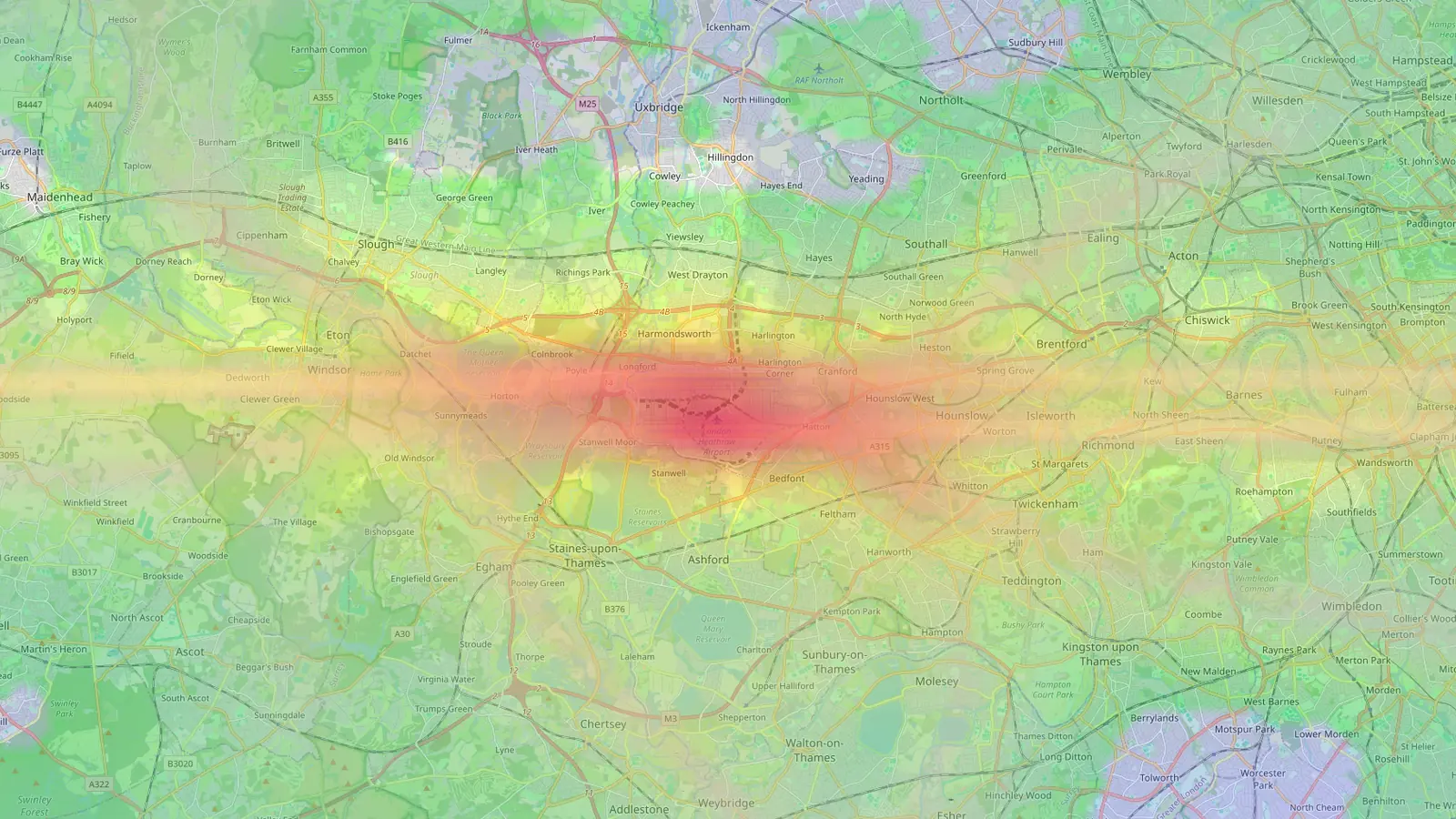
Heathrow, LAX, JFK, O'Hare, CDG and 11 more major hubs
16 of the world's major hub airports join Flight Path Noise, and the main airport now takes the city's address for London, Toronto and Paris.
On this page
Until today our maps in London, Los Angeles, New York, Chicago and Toronto covered the smaller airports closest to the centre. Those airports matter, but the main hub is usually the one people look up first. Today we are adding 16 of the world’s major hub airports, each with its full written guide, which takes Flight Path Noise to 129 airports in 50 countries.
The 16 new hub airports
United States:
- Los Angeles International (LAX)
- New York JFK and Newark Liberty
- Chicago O’Hare
- San Francisco International, Oakland and San José
- Seattle–Tacoma
- Denver International
Europe:
Elsewhere:
- Toronto Pearson
- Ben Gurion, Tel Aviv, our first airport in Israel
- Kempegowda International, Bangalore
These sit alongside the close-in airports we already cover, so several cities now have two or three maps. New York has LaGuardia, JFK and Newark. Los Angeles has Hollywood Burbank and LAX. Chicago has Midway and O’Hare. The San Francisco Bay Area has three airports of its own.
Some addresses have changed
In three cities, the city’s own address now belongs to its main airport.
Heathrow is now at /london/. London City Airport, which used to be there, has moved to /londoncity/, and its page is now titled London City so the two are never confused.
Toronto Pearson is now at /toronto/. Billy Bishop Toronto City Airport has moved to /billybishop/.
Paris Charles de Gaulle is at /paris/, and Orly is at /orly/.
If you bookmarked or shared a London City or Billy Bishop page using the old address, the link now opens the main airport instead. Use the new addresses above to get back to the smaller airport. Saved pins are kept by your browser per airport, so the pins you made at London City or Billy Bishop are still on those pages.
What the hub guides cover
Each hub has the same layout as every other airport: the live map, the noise heatmap, route density, flight paths, address search and the stats dashboard, with a written guide below. Several of the hub guides focus on how runway use changes from day to day, because that decides who hears the aircraft.
The Heathrow guide explains how westerly and easterly operations send aircraft over different parts of west London and Berkshire, from Richmond and Hounslow to Cranford and Windsor, and how runway alternation on westerly days gives communities a predictable half-day break. The Charles de Gaulle guide covers the airport’s 24-hour operations and the towns north of Paris that hear them, such as Gonesse, Goussainville and Tremblay, while the Orly guide explains its night curfew. At JFK, the guide looks at overnight arrivals that fly low over Rosedale, Inwood and Valley Stream, and at O’Hare it follows the east–west flight paths over Bensenville, Norwood Park and Elk Grove Village.
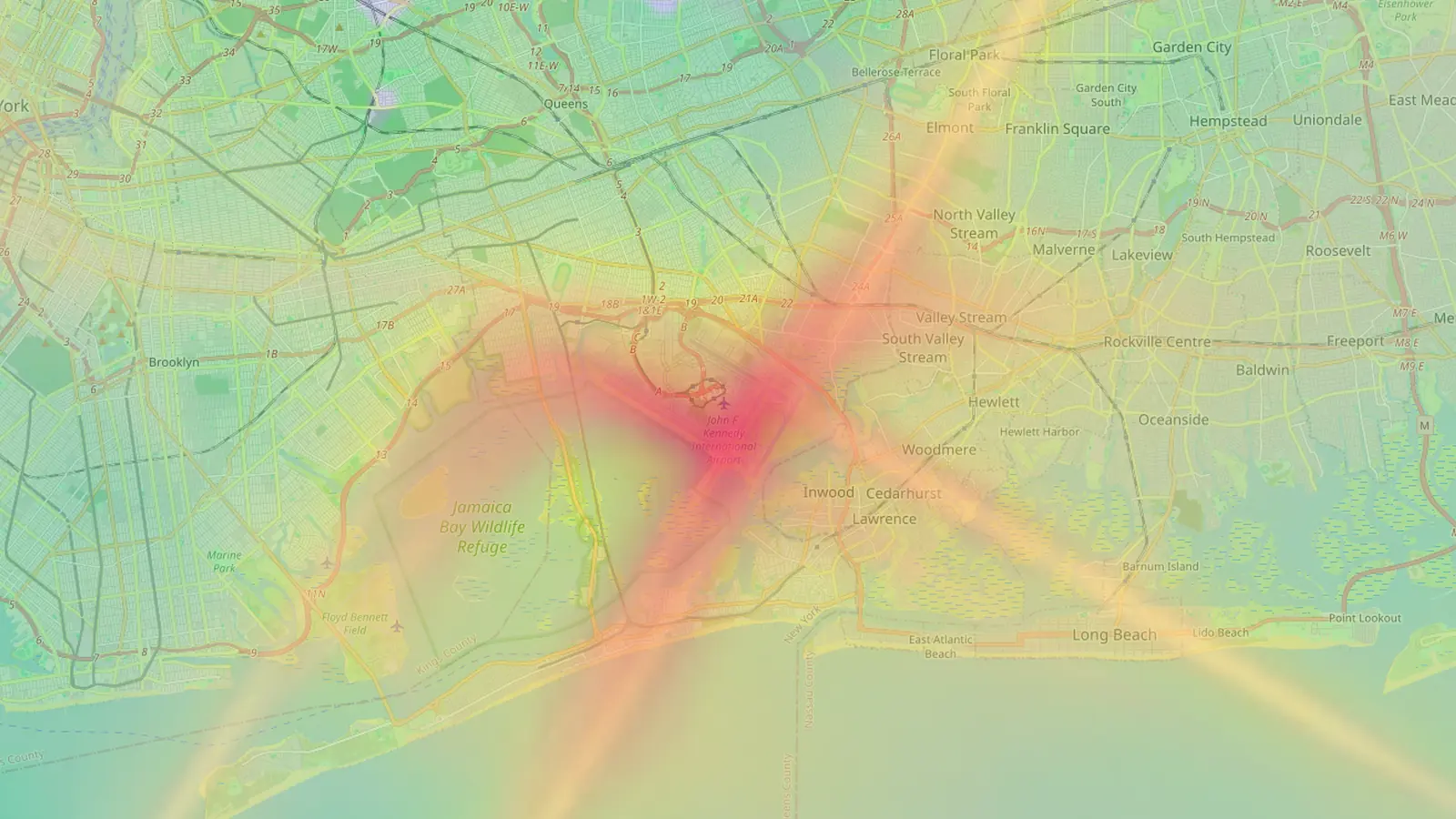
Because these airports joined today, their maps hold only a few hours of recorded flights for now. Heatmaps and stats fill in over the coming days, and preview cards for sharing appear after seven days of data. As everywhere on the site, the noise levels are estimates calculated from recorded flight tracks, best used to compare one street with another.
Frequently asked questions
- I had /london/ bookmarked for London City. Where has it gone?
- London City Airport's page is now at /londoncity/, with all the same information. The /london/ address now opens Heathrow. In the same way, Billy Bishop Toronto City is now at /billybishop/ and /toronto/ opens Pearson.
- Why add the big hubs now?
- We started with airports that sit closest to city centres, which in many cities meant the smaller close-in airport. The main hubs handle far more flights, and they are the airports most people look up first.
Airports mentioned
Related updates
A calibrated noise model, checked against real noise monitors
Our noise levels are now calibrated against official airport noise-monitoring data, and flight tracks are smoothed so turns are drawn properly.
Gatwick area pages, nearby airports on the map, and postcodes
Our first UK area pages cover 29 places around Gatwick, airport maps now show nearby airports, and suburb tables can be filtered by postcode.
Does your airport have a curfew? Every airport page now answers
Every airport page on Flight Path Noise now opens with a plain yes, partial or no answer on night curfews, with the hours and a short explanation.