Nine more Australian airports, from Gold Coast to Jandakot
Nine Australian airports with well-known local noise debates, from new runways and flight paths to round-the-clock operations and training circuits.
On this page
Today we are adding nine Australian airports, each with its map and written guide from the start. That brings Flight Path Noise to 113 airports. We picked these nine because each has a noise debate that people living nearby already know well, and a map of where the aircraft really fly helps make sense of it.
New runways and changed flight paths
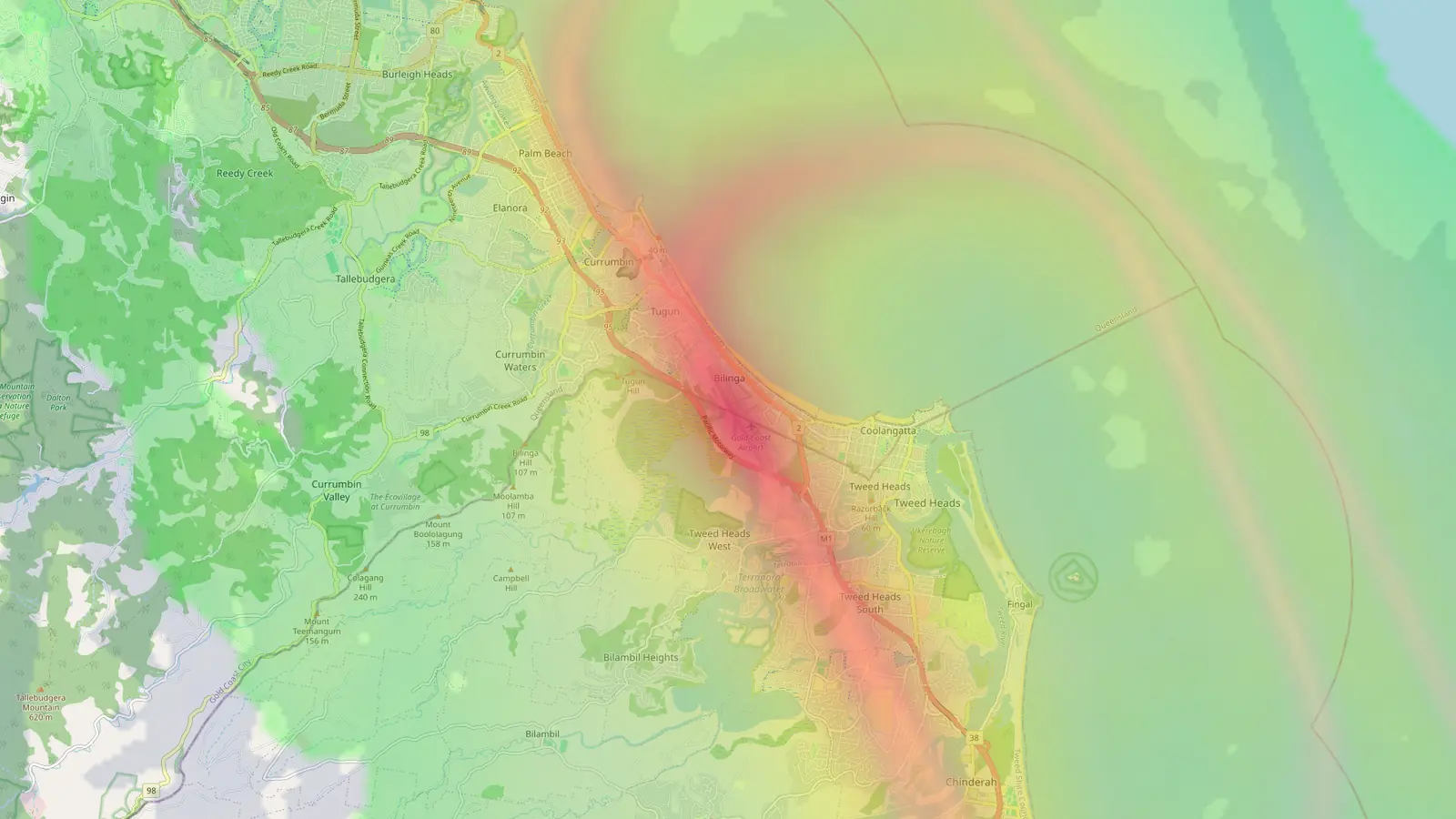
Gold Coast Airport has one main runway that crosses the Queensland and New South Wales border at Bilinga, with Tweed Heads just off its southern end. The local argument is about the instrument landing system for runway 14, which lines arriving jets up in a narrow corridor over the coastal suburbs north of the airport, from Palm Beach towards Surfers Paradise. Tugun, Currumbin and Coolangatta are also close to the flight paths.
At Sunshine Coast Airport, the change came with a new runway. In June 2020 the airport moved from its old north–south runway to a new one pointing north-west to south-east, and communities that had rarely heard a jet found themselves under the new paths. Marcoola, Mudjimba, Pacific Paradise, Twin Waters and Bli Bli are the areas to look at.
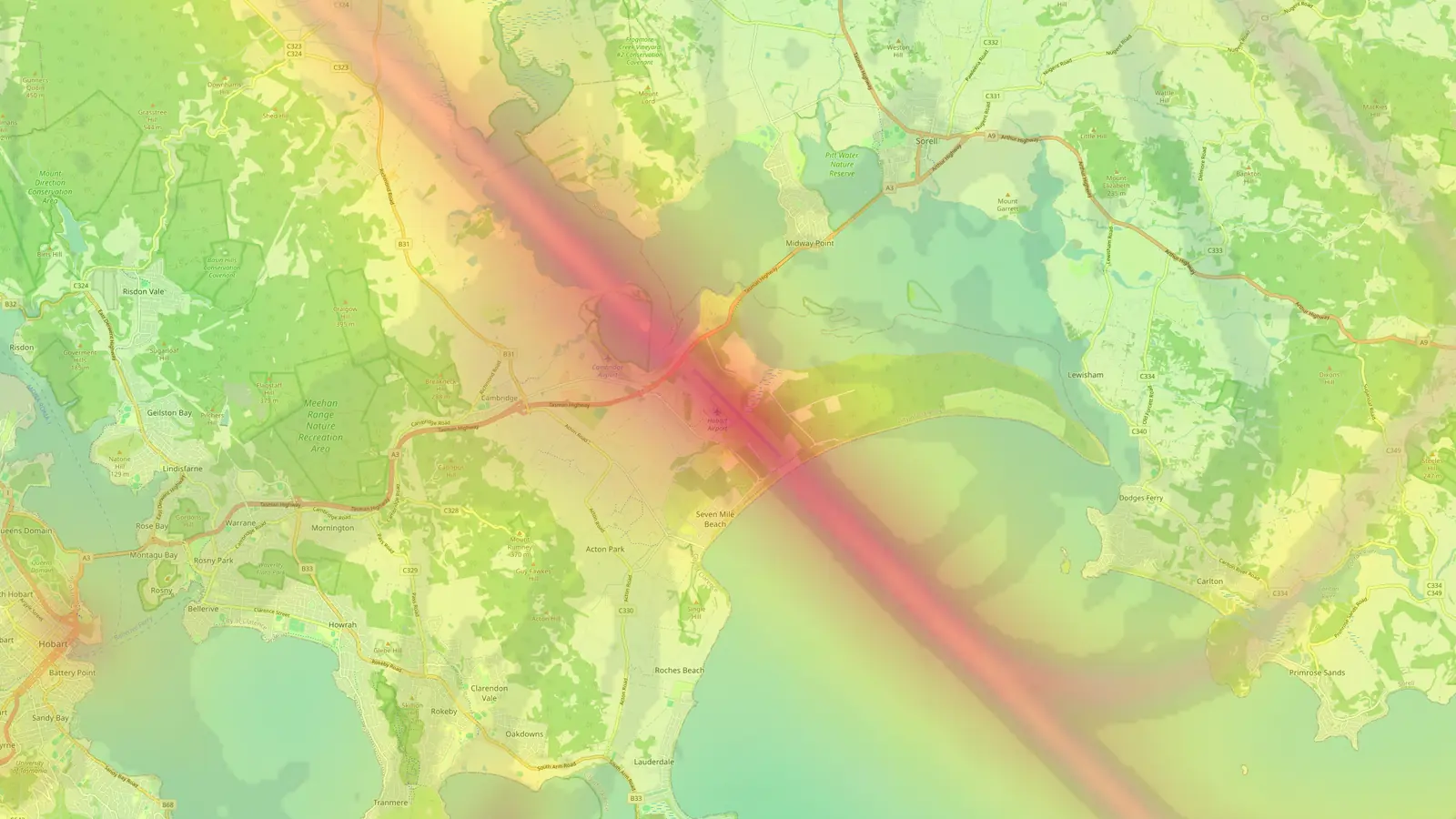
Hobart Airport sits on a narrow peninsula at Cambridge, about 17 km from central Hobart, with water on most sides, so many flights come and go over the bays. The concern is the short approach to runway 30, which brings arriving aircraft low over Seven Mile Beach, Carlton and Primrose Sands.
Round-the-clock flying and new airspace
Canberra Airport operates 24 hours a day with no curfew. Night freight and late jet movements are the issue there, and Jerrabomberra, Queanbeyan and Oaks Estate sit near the runway 35 arrival path.
Ballina Byron Gateway is a single-runway regional airport on the NSW Northern Rivers coast and the main air gateway for the Byron Bay area. Its airspace is due to become air-traffic controlled in July, with a redesign that puts arrivals and departures onto fixed routes. Lennox Head, Skennars Head, Cumbalum, Teven and Tintenbar are the places to check, and the map gives you a record of where aircraft fly now.
Training circuits at four general aviation airfields
Four of today’s airports are busy general aviation fields where flight schools fly circuits: take off, a loop around the airfield, land and go again.
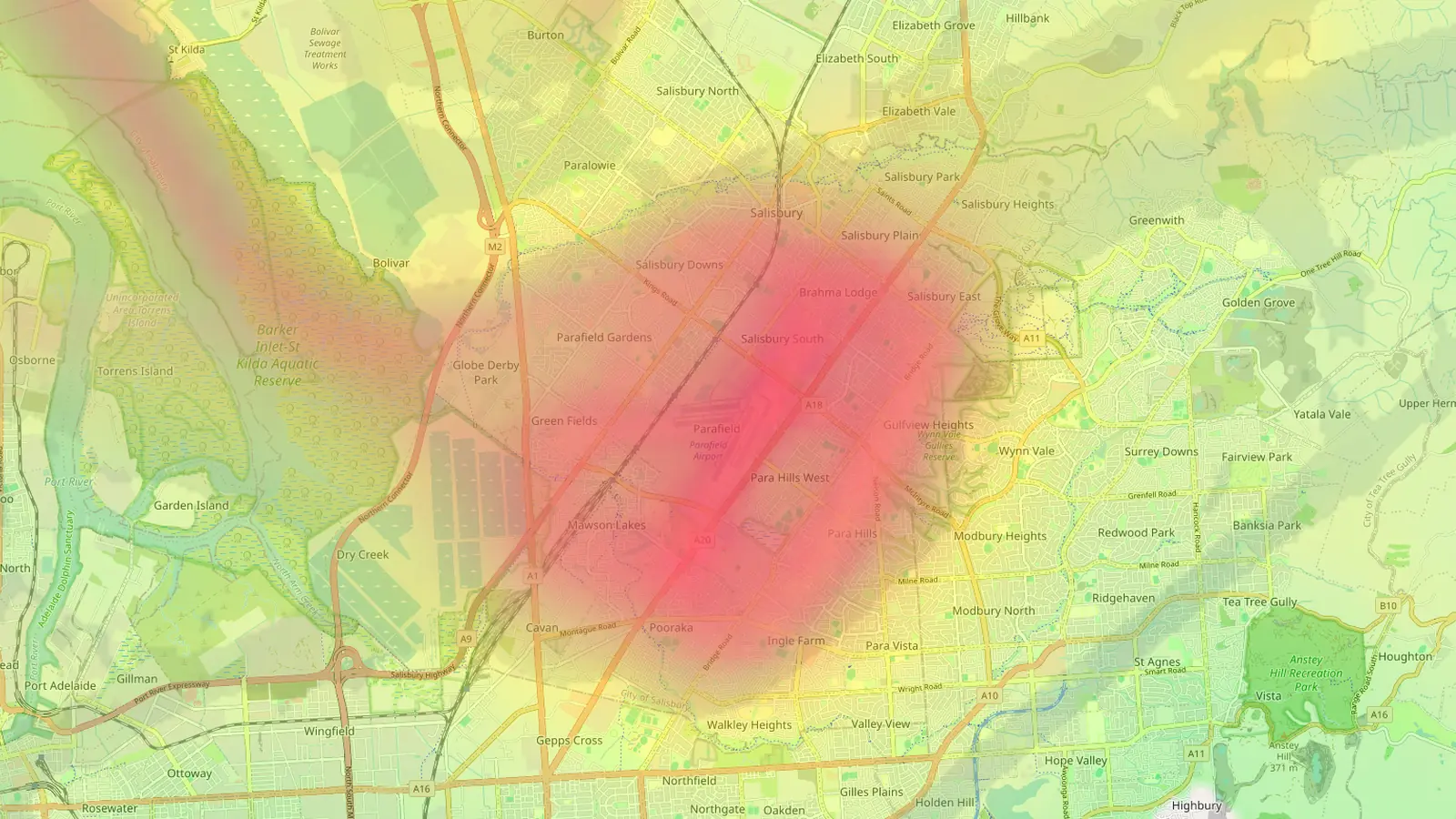
- Parafield in Adelaide’s north, near Mawson Lakes, Parafield Gardens and Salisbury
- Jandakot in Perth’s south, near Canning Vale, Banjup, Atwell and Success
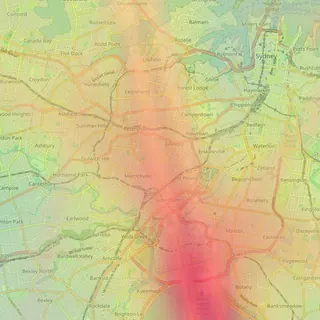
- Bankstown in Sydney’s south-west, near Milperra, Revesby, Padstow, Condell Park and Georges Hall
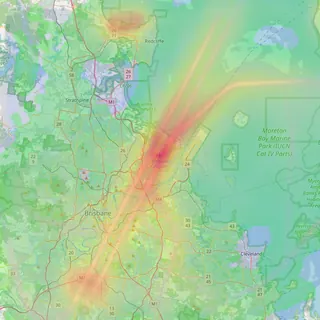
- Archerfield in Brisbane’s south, near Acacia Ridge, Coopers Plains, Salisbury and Sunnybank Hills
Circuit noise is different from airliner noise. Each pass is quieter, but the same few streets hear it over and over through the day. On these maps the route density layer is the one to switch on, because it shows the circuit pattern clearly. Many training aircraft do not broadcast their position, so the counts will be lower than the real number of flights, and the noise estimates should be read as a floor.
How to look up your street
Open any of the nine pages and search for an address, or click the map, to get the estimated daily average level, the loudest overflight, flights per day and an hourly chart for that point. The written guide below the map names the neighbourhoods near the flight paths and explains how the runways are used.
The new airports start with only a few hours of recorded flights, so their maps will fill in over the next days and weeks. Their preview cards for sharing appear after seven days of data.
Frequently asked questions
- Why does a training airfield show fewer flights than I hear?
- Our maps are built from aircraft that broadcast their position. Many small training aircraft do not, so at airfields like Bankstown or Jandakot the map shows the shape of the circuits correctly but undercounts how many flights there are.
- Is circuit training noise really an issue if the aircraft are small?
- Each pass is quieter than a jet, but training aircraft go round the same loop many times a day at low height. The same streets hear them again and again, and the hourly chart for your street shows how that is spread through the day.
Airports mentioned
Related updates
Brisbane suburb noise pages
30 new suburb noise pages for Brisbane combine Brisbane Airport and Archerfield traffic, from Tingalpa and East Brisbane to Hamilton and Bulimba.
Suburb noise pages for Sydney and Melbourne
267 new pages, one per suburb, show how many aircraft pass over Sydney and Melbourne suburbs, how low they fly and which airport they come from.
44 new airports across the United States and Europe
Flight Path Noise now covers 173 airports in 53 countries, with 14 new US airports and 30 in Europe, each with a local guide and a curfew answer.