Suburb noise pages for Sydney and Melbourne
267 new pages, one per suburb, show how many aircraft pass over Sydney and Melbourne suburbs, how low they fly and which airport they come from.
On this page
When people look into aircraft noise, they usually start with a suburb name. Is Marrickville noisy? How bad is it in Tempe? Today we’re launching suburb noise pages to answer those questions directly. There are 267 of them, 139 across Sydney and 128 across Melbourne, each at its own address such as /australia/nsw/marrickville/.
What a suburb page shows
Each page gives a short verdict on how much aircraft noise the suburb gets and where it ranks within its city, followed by the numbers behind it: overflights on a typical day, the typical height of those aircraft, how much of the traffic is low, the share that are arrivals, and when the first and last movements usually happen. There’s a breakdown by hour, a comparison of weekdays and weekends, and an estimated range for peak ground noise.
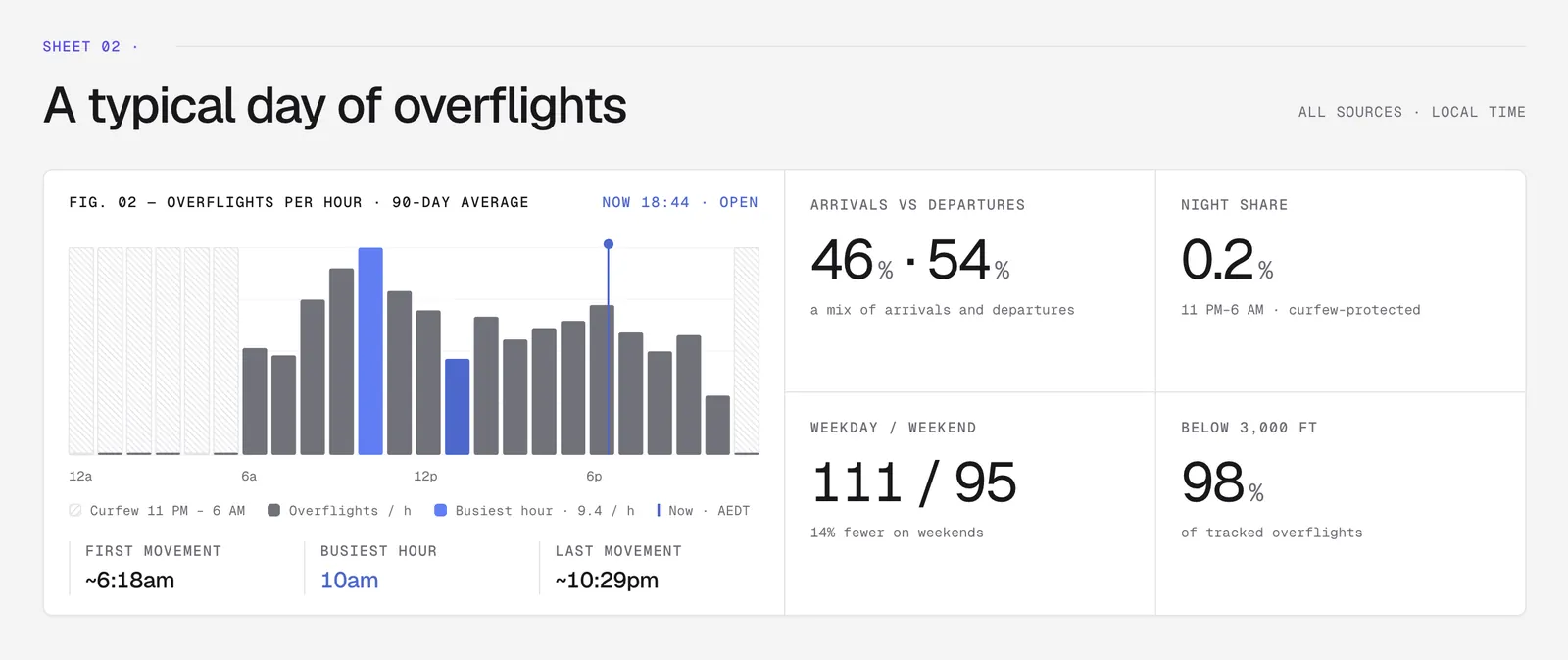
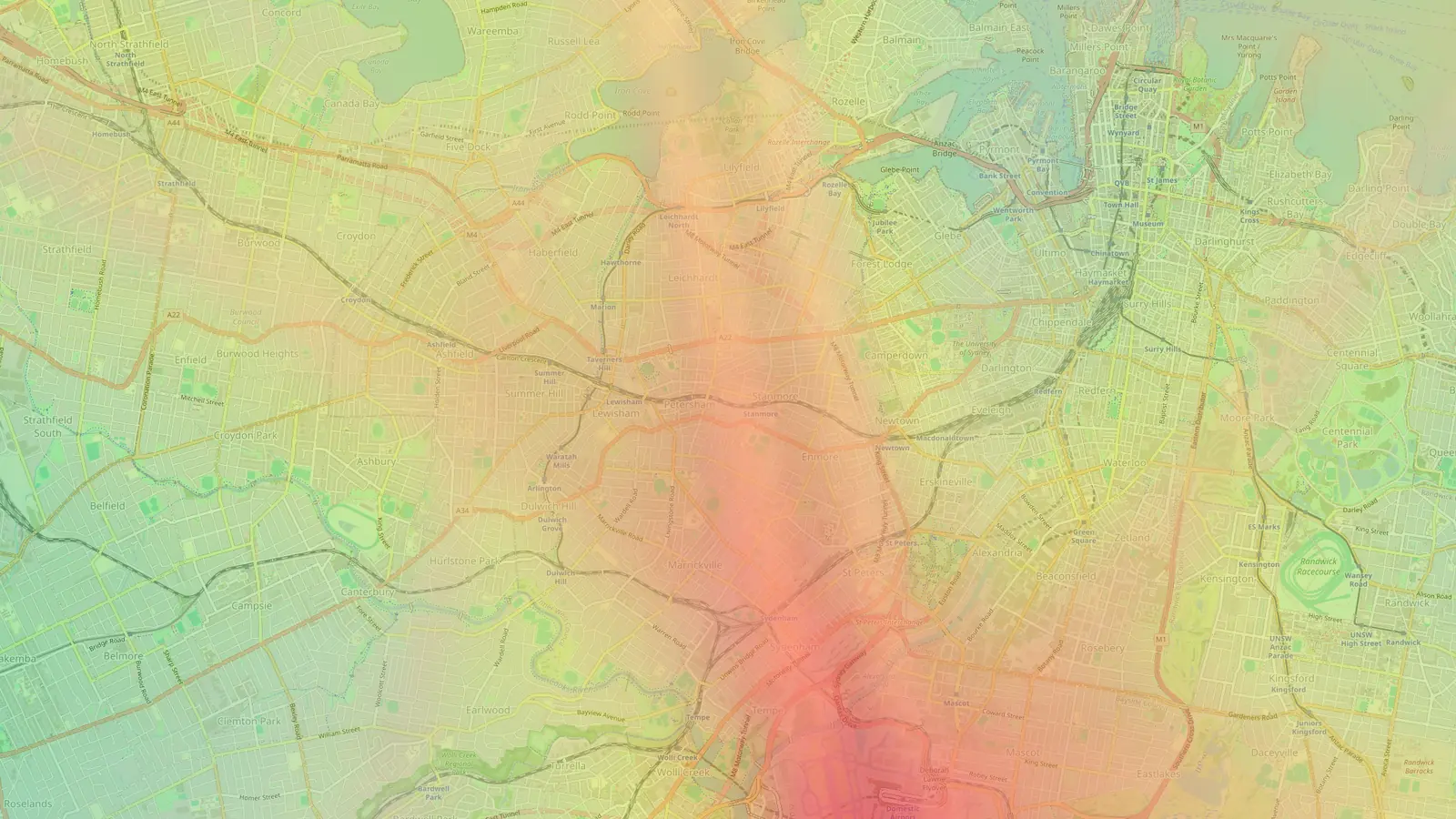
At the top of the page is a map of the suburb, its boundary drawn over the noise heatmap so you can see which streets sit closest to the busiest paths. Further down, a table compares the suburb with its neighbours.
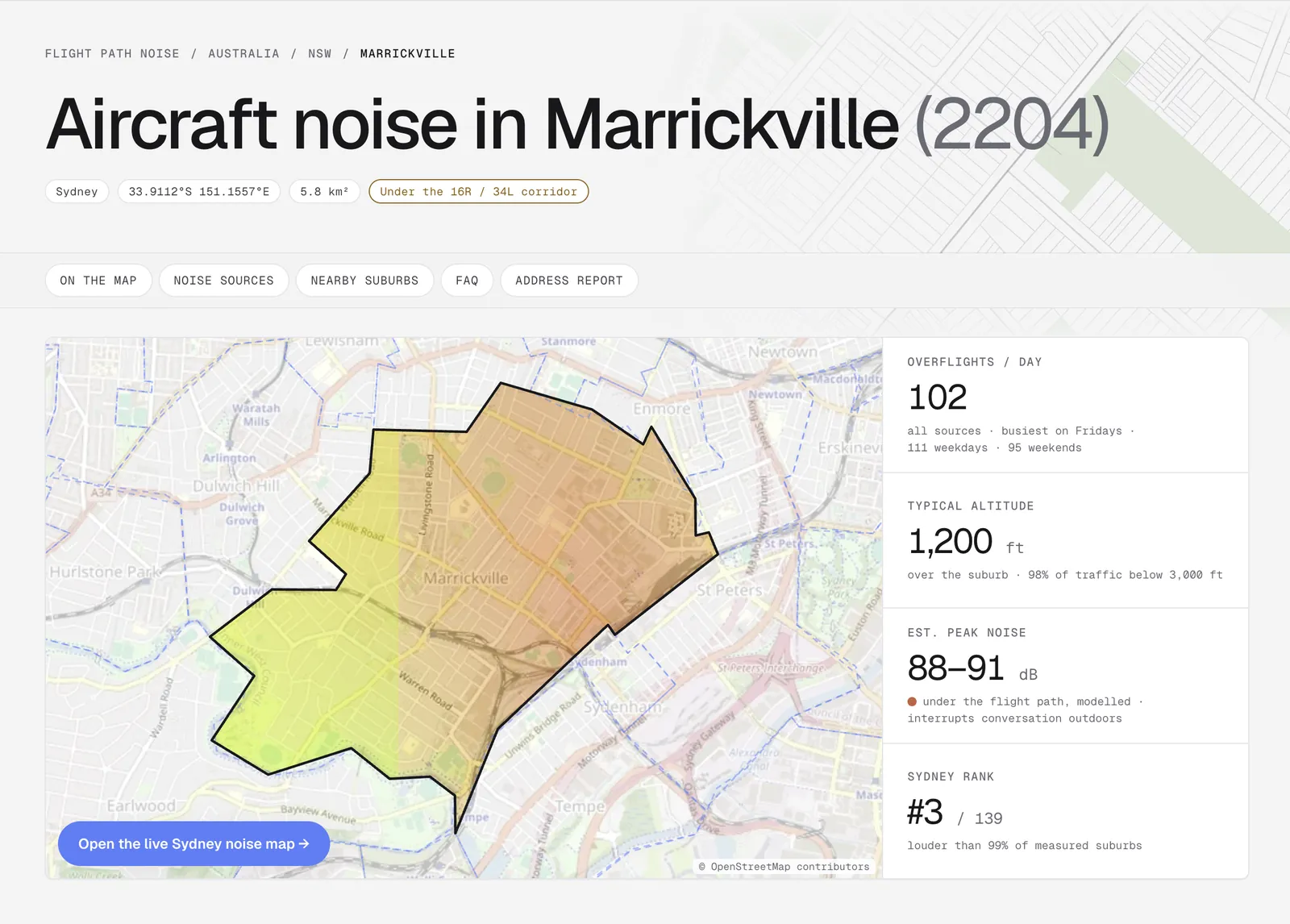
Overflight counts and heights come from recorded flight tracks. Noise levels are modelled estimates based on aircraft type, height and distance, so treat them as a guide for comparing places.
Every nearby airport in one place
A suburb doesn’t care which airport a plane belongs to, so each page combines all the traffic we track around it. Sydney pages blend Sydney Airport and Bankstown. Melbourne pages blend Melbourne Airport and Moorabbin. A third group covers other low-flying aircraft, including helicopters, seaplanes and light aircraft from airfields we don’t track separately.
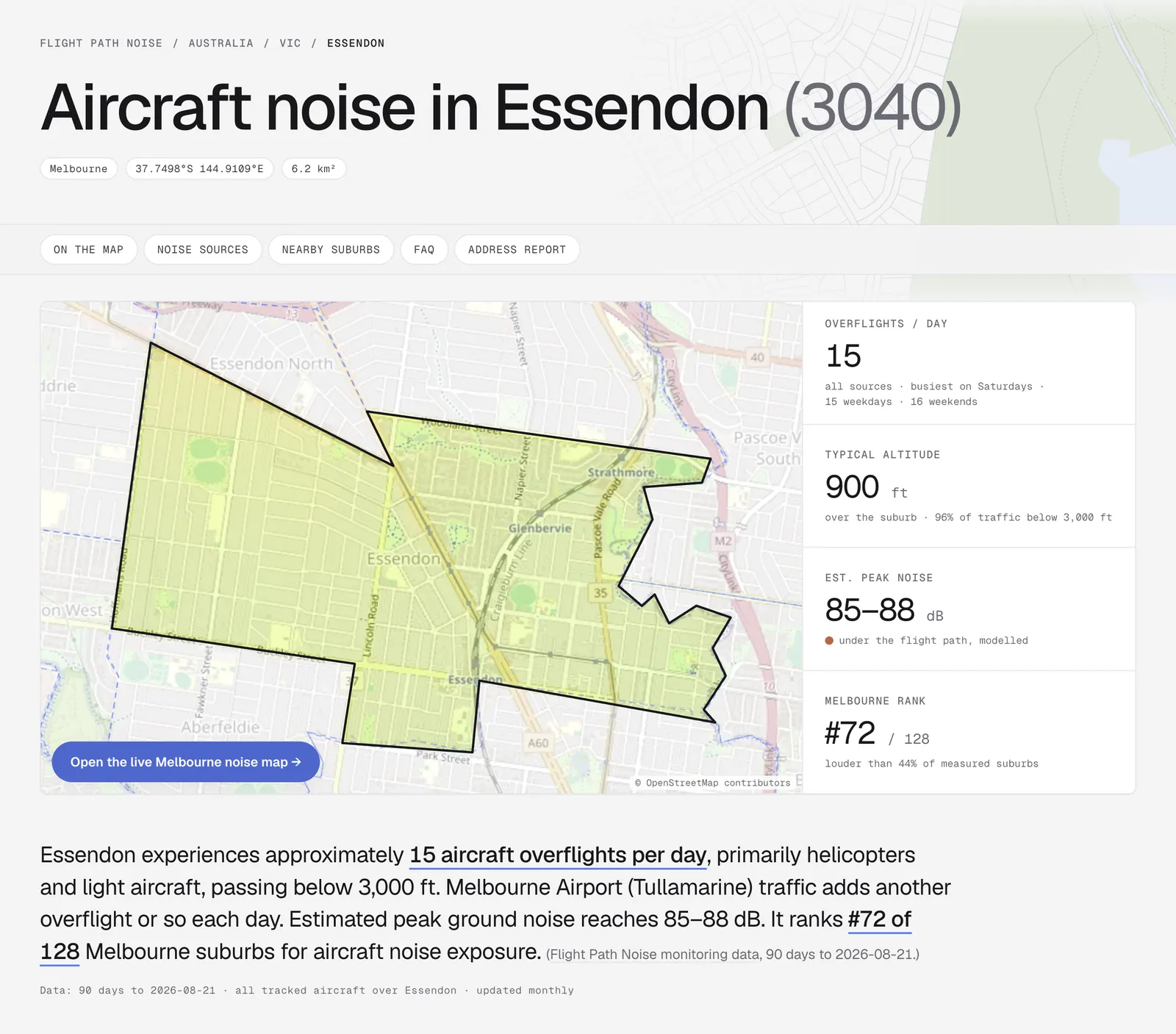
The “Where the noise comes from” section splits the total by source and explains each one. In Kurnell, most of the traffic comes from Sydney Airport, but a real share is low-flying aircraft that aren’t using it. In Essendon, the reverse is true: most overflights come from Essendon Fields and other light traffic, and only a small number from Melbourne Airport. Pages also show which runway directions are involved, because the wind decides whether a suburb gets arrivals, departures or both.
How suburbs were chosen and ranked
We didn’t want pages for suburbs where planes are an occasional distant hum, so a suburb gets a page only if it has real overflight exposure. That means regular low overflights and a minimum modelled noise level. The same rule applies in both cities. Airport grounds are left out.
Suburbs are ranked within their own city. The region pages at /australia/nsw/ and /australia/vic/ list every suburb in order. In Sydney the top three are Mascot, Kurnell and Marrickville. Mascot, right beside the runways, saw about 271 overflights a day at a typical height of around 400 ft. In Melbourne the top three are Bulla, Oaklands Junction and Clarkefield, under the flight paths north and north-west of Melbourne Airport. Closer to the city, Keilor East ranks sixth.
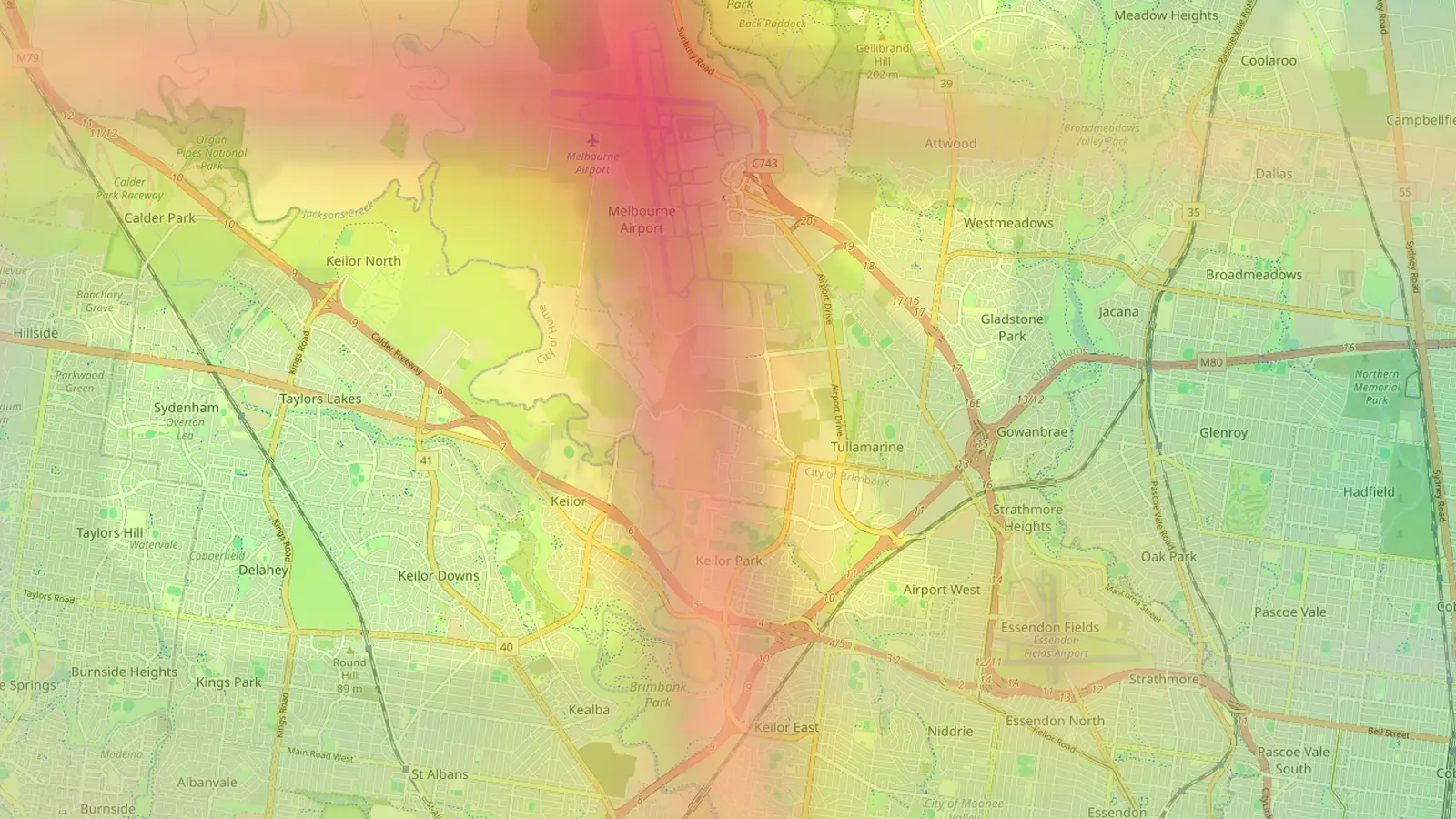
The figures cover about three months of recorded flights, from late May to late August 2026. Runway use depends on the wind, so a suburb’s busiest weeks can differ from the average shown here.
Getting to a suburb page
You can reach a suburb page from its region page or from the airport. On the Sydney and Melbourne airport pages, a new “Suburb noise guide” table lists the suburbs that airport affects, and each name links through. Suburb names in the neighbourhood tables of the airport guides link to their pages too, so if you’re reading about Tempe or Sydenham in the Sydney guide, one click takes you to the full picture. Inner-west suburbs further from the runways, such as Leichhardt, have pages of their own as well.
For a single address, the airport map is still the best tool. Drop a pin on the street and you get a report for that exact point.
Frequently asked questions
- Why doesn't my suburb have a page?
- A suburb gets a page only when it has real overflight exposure, meaning regular low overflights and a minimum modelled noise level. If your suburb isn't listed, aircraft rarely pass over it low enough to matter. You can still check any address on the airport's map.
- Are the noise levels on suburb pages measured?
- No. Overflight counts and heights come from recorded flight tracks, but the noise levels are modelled estimates based on aircraft type, height and distance. They are useful for comparing suburbs, and they are not a substitute for a sound meter.
Airports and places mentioned
Related updates
Gatwick area pages, nearby airports on the map, and postcodes
Our first UK area pages cover 29 places around Gatwick, airport maps now show nearby airports, and suburb tables can be filtered by postcode.
61 airports: Sydney, Melbourne and 49 more cities
Flight Path Noise now covers 61 airports in 34 countries, including our first Australian airports and 50 cities where the airport sits close to home.
Does your airport have a curfew? Every airport page now answers
Every airport page on Flight Path Noise now opens with a plain yes, partial or no answer on night curfews, with the hours and a short explanation.