Heathrow runway alternation: how it works, and how closely it is kept
How Heathrow's runway alternation works, when the runways switch, and what 12 weeks of our flight data show about how closely the timetable is kept.
On this page
If you live under one of Heathrow’s approaches, you will know the rhythm: a steady line of aircraft overhead for half the day, then quiet. That rhythm is called runway alternation, and it is one of the main ways Heathrow shares out arrival noise. This guide explains how it works as of November 2026, and then checks the timetable against what our flight tracking data recorded over 12 weeks this autumn.
How runway alternation works
Heathrow has two parallel runways running east to west, about 1.4 km apart. Which way aircraft use them depends on the wind, because aircraft take off and land into it.
On westerly days, the most common case at about 70% of the year according to Heathrow, aircraft arrive from the east over London and land towards the west. The runways are then called 27L (the southern runway) and 27R (the northern runway). One runway handles landings and the other handles take-offs, and at 3 PM they swap. The daytime pattern runs from 6 AM until the last departure.
The order flips every week. Heathrow’s weeks start on a Monday, so if the northern runway takes the morning arrivals this week, it takes the afternoon arrivals next week. For example, Heathrow’s 2026 programme has the northern runway landing until 3 PM in the week commencing 16 November, and the southern runway landing after 3 PM. The aim is predictable relief: if an approach passes over your home in the morning, it should not pass over you in the afternoon as well.
There are two built-in exceptions. Between 6 AM and 7 AM, the busiest hour for arrivals, both runways can be used for landing. And after 7 AM, if arrivals are badly backed up, Heathrow may land up to six aircraft an hour on the departure runway.
Easterly days and the Cranford Agreement
When the wind is from the east, aircraft land towards the east over Windsor and Datchet, on runways called 09L (northern) and 09R (southern). There is currently no daytime alternation in this direction. The northern runway lands and the southern runway takes off.
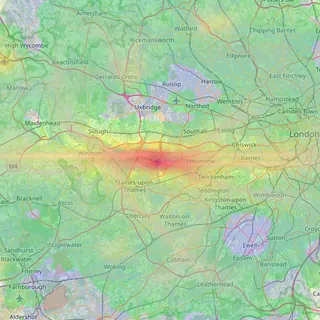
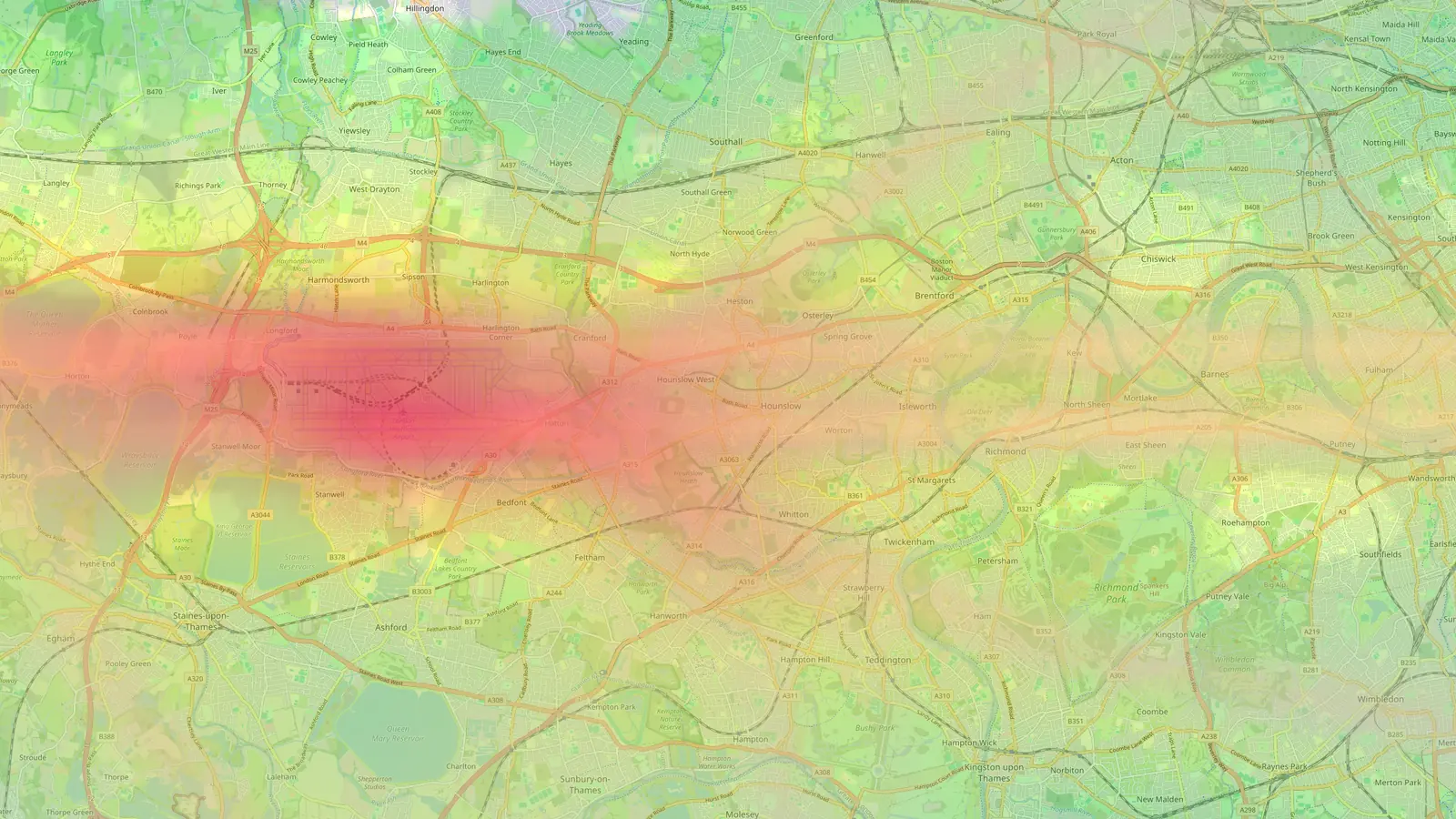
Our noise map shows both sides of the airport. The western approach over Windsor and Datchet carries easterly arrivals, while the eastern approach over Hounslow carries westerly ones.
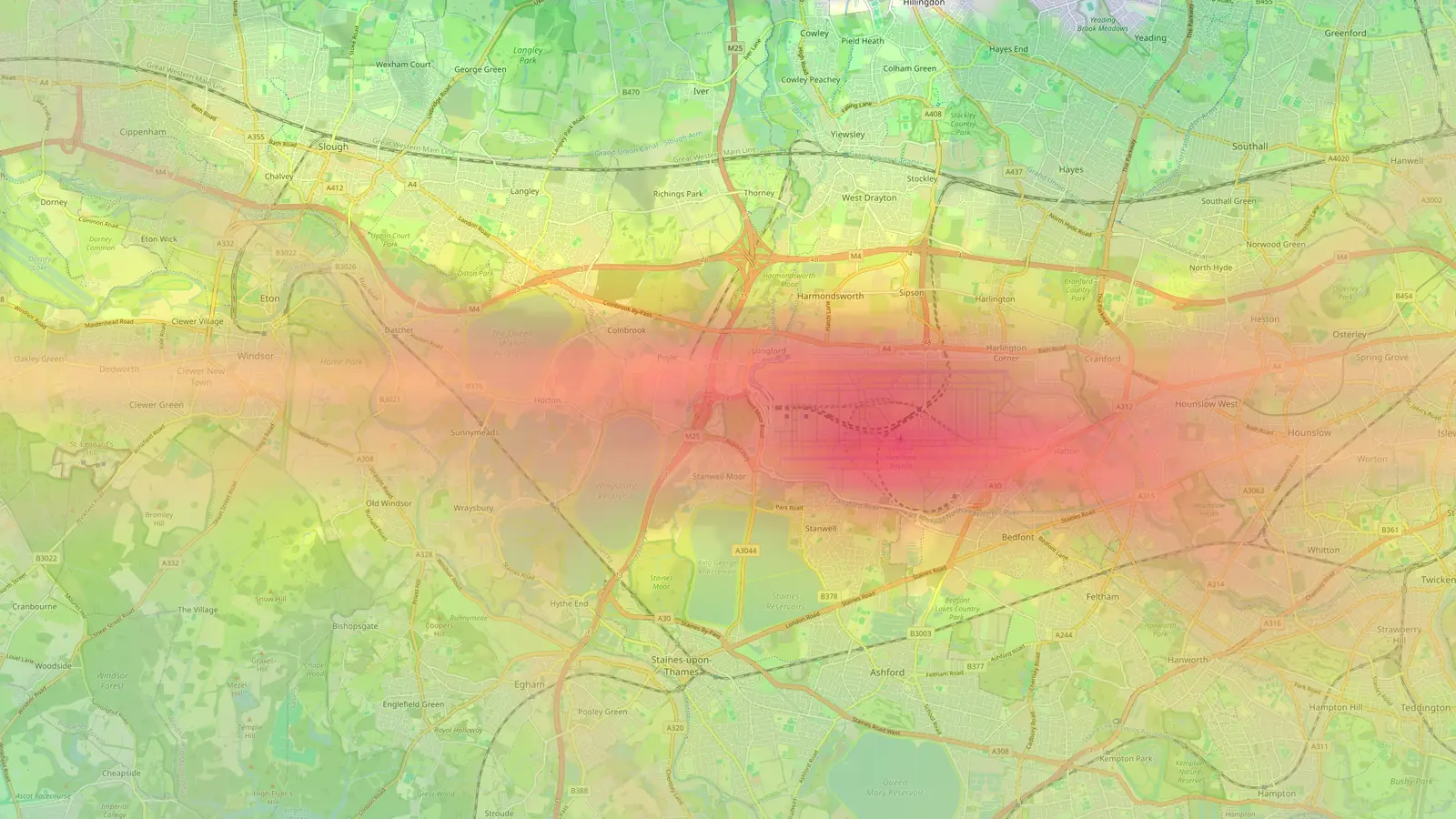
The reason is historical. The Cranford Agreement kept departures towards the east off the northern runway, to spare Cranford, which sits just beyond its eastern end. The government ended the agreement in 2009, but alternating on easterly days needs new taxiways and other works at the airfield. Heathrow says Hillingdon Council resolved to grant planning permission in December 2025, with the final permission still being completed, and it has not yet given a start date. For now, Heathrow says aircraft depart towards the east from the northern runway only in exceptional circumstances.
Early-morning arrivals and the night timetable
Heathrow has no full curfew, but its night quota period, 11:30 PM to 6 AM, is limited by a cap on flights and a noise quota. Under a voluntary agreement, flights scheduled to land between 4:30 and 6 AM are not supposed to land before 4:30. Heathrow says around 80% of its night flights arrive in that early window.
Our own data shows that shape clearly. Landings stop almost entirely in the small hours, start again at about 4:30 AM, and reach the full daytime rate at 6 AM.

Those early arrivals follow their own timetable. From the last departure until 6 AM, Heathrow rotates the landing runway, and where the wind allows, the direction of approach, on a four-week cycle. Monday’s pre-6 AM arrivals still follow the previous week’s night pattern.
This autumn has been unusual. Heathrow is resurfacing its runways, and on nights from Sunday to Thursday all flights between about 10:30 PM and 6 AM are using a single runway, with the normal pattern on Friday and Saturday nights. Heathrow says this temporary arrangement runs until 19 December.
What our flight data shows
We looked at more than 53,000 landings recorded between 25 August and 15 November 2026. For each one, we used the aircraft’s position on its final approach to work out which way it was landing and which runway it used. The two runway centrelines show up clearly in the data, about 1.4 km apart. We then compared every landing with Heathrow’s published programme for that day and hour.
In the chart below, each row is one day and time runs from left to right. Each half hour is coloured by the runway that landed: blue for the northern runway, orange for the southern. On westerly days the colour switches at 3 PM, and because the order swaps every Monday, the weeks alternate between blue-then-orange and orange-then-blue.

The pattern is strikingly regular:
- The timetable is kept. On westerly days, 98% of landings between 7 AM and 11 PM used the runway the programme named for that week and time of day.
- The 3 PM switch is sharp. In a week when the northern runway had the mornings, 96% of westerly landings before 3 PM used it, and only about 1% after. Within a few minutes of 3 PM, the arrivals have moved over.
- Breaks are rare. Of 128 westerly half-days with enough traffic to judge, 122 had at least 95% of landings on the planned runway. The clearest break was the morning of Tuesday 6 October, when arrivals used the southern runway until about 11 AM instead of the northern one.
- 6 to 7 AM is shared. Only about two-thirds of landings in that hour matched the day’s pattern, as you would expect when both runways are allowed to land.
Easterly days look very different. 98% of easterly landings used the northern runway, morning and afternoon alike, and we recorded virtually no departures towards the east from the northern runway. If you live under the easterly approach to the northern runway, you get no half-day break on those days.
The wind decided a lot. About three-quarters of landings in our window were westerly. Of the 83 days, 54 were westerly all day, 15 easterly all day, and on 14 the airport changed direction part-way through. Early November was mostly easterly. Twelve weeks of autumn can’t tell you the split for a whole year, so for that, use Heathrow’s figure of about 70% westerly.
Early mornings matched the published rules too. As the hourly chart above shows, the first landing of the day typically came at about 4:30 AM, with about 14 landings a day before 6 AM and almost none between 2 AM and 4:30 AM. The few landings after midnight were late-running flights. On weekday mornings, every pre-6 AM landing used the southern runway, which matches the resurfacing arrangement. At weekends, the large majority followed the four-week night timetable.
How to find out which runway is in use
Heathrow publishes a runway alternation programme each year, listing the daytime landing runway before and after 3 PM for every week and the planned night runway. You’ll find it on the runway alternation page of Heathrow’s website. Heathrow also posts updates about runway works on its @HeathrowRunways account on X. Remember that the programme only covers westerly days in the daytime, and that weather, works or delays can change the plan.
To see what is happening right now, open our Heathrow map, where live aircraft are shown on approach.
Check your own street
Alternation decides when you hear arrivals, not whether you do. To see how often aircraft pass over a particular address, how loud they typically are, and how that splits across the hours of the day, drop a pin on the Heathrow map. If you are close to the approach to one runway, the hourly breakdown will show the half-day pattern described here.
Frequently asked questions
- Which runway is Heathrow using today?
- On westerly days, Heathrow's annual runway alternation programme tells you which runway is landing before and after 3 PM in any given week, and which runway is planned for the night. It is published as a PDF on the runway alternation page of Heathrow's website. Weather, works or delays can change the plan on the day, so the live aircraft on our Heathrow map are the quickest way to see what is actually happening.
- Does alternation happen at night?
- Yes, but on a different timetable. From the last departure until 6 AM, Heathrow rotates the landing runway, and where the wind allows the approach direction too, on a four-week cycle. Monday's early arrivals still follow the previous week's night pattern. During this autumn's runway resurfacing, weeknight arrivals have been landing on a single runway instead.
- Why is my area noisy in the mornings one week and afternoons the next?
- That is alternation working as designed. If you live under the final approach to one runway, you get its arrivals for half of each westerly day, mornings one week and afternoons the next, because the order flips every Monday. Your neighbours under the other runway get the opposite half.
- Why does alternation stop when the wind is from the east?
- For decades the Cranford Agreement stopped aircraft taking off towards the east from the northern runway, so on easterly days the northern runway lands and the southern runway departs. The government ended the agreement in 2009, but the taxiways and other works needed for easterly alternation are still going through planning, and Heathrow has not set a start date.
- Does the wind decide which way Heathrow operates?
- Yes. Aircraft take off and land into the wind, so a westerly wind means landing towards the west over London, and an easterly wind means landing towards the east over Windsor. Heathrow says it operates westerly about 70% of the year.
Airports and places mentioned
Related updates
Gatwick area pages, nearby airports on the map, and postcodes
Our first UK area pages cover 29 places around Gatwick, airport maps now show nearby airports, and suburb tables can be filtered by postcode.
Does your airport have a curfew? Every airport page now answers
Every airport page on Flight Path Noise now opens with a plain yes, partial or no answer on night curfews, with the hours and a short explanation.
Heathrow, LAX, JFK, O'Hare, CDG and 11 more major hubs
16 of the world's major hub airports join Flight Path Noise, and the main airport now takes the city's address for London, Toronto and Paris.